
Plastic waste pollution is one of the biggest environmental challenges facing Vietnam. Faced with this alarming situation, the Government has outlined a strict roadmap for reducing plastic waste, especially tightening Extended Producer Responsibility (EPR) regulations (Source:vtv.vn). For businesses, this is both a legal obligation and a chance to strengthen their reputation. Eco Revive offers soft plastic packaging recycling and EPR advisory services to support the transition.
VIETNAM’S ROADMAP TO REDUCE PLASTIC WASTE: SOFT PACKAGING
Soft plastic packaging, including thin film, plastic bags, shrink wrap, and food packaging, makes up a substantial share of plastic waste in Vietnam. It is also difficult to collect and recycle because it is light, often contaminated, and costly to process.
To thoroughly solve this problem, the roadmap to reduce plastic waste in Vietnam has been implementing strong measures:
- Compulsory application of the EPR mechanism, forcing packaging manufacturers and importers to be responsible for collecting and recycling at the prescribed rate.
- Shifting to a circular economy, aiming to gradually reduce the use of virgin plastic, promoting the use of recycled plastic in packaging production to close the life cycle of plastic.
BUSINESS CHALLENGES UNDER THE EPR ROADMAP
When the EPR roadmap enters the strict implementation phase, many Vietnamese businesses are facing difficult problems:
- Limited legal expertise can make it difficult to prepare declarations, calculate the recycling cost factor (Fs), and maintain compliant EPR records.
- Soft plastic packaging requires specialized recycling technology to ensure output quality, and many traditional facilities struggle to meet environmental standards.
ECO REVIVE: A PARTNER FOR A GREENER TRANSITION
Recognizing the pressure that current developments place on businesses, Eco Revive offers practical solutions that connect business goals with Vietnam’s plastic waste reduction roadmap.
1. Specialist soft plastic packaging recycling
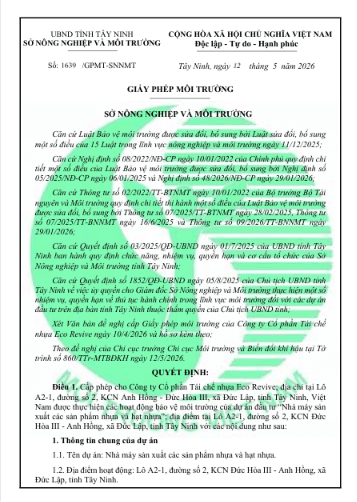
Eco Revive has invested in technology and processes for recycling hard-to-process soft plastic packaging. The article cites a capacity of up to 30,000 tonnes a year to help businesses meet their EPR volume requirements.
After collection, plastic film and plastic bag waste will be classified, cleaned and go through a closed recycling process to create high quality recycled plastic raw materials. This solution helps minimize the amount of plastic waste buried or discharged into the ocean, turning waste into a resource that goes back into the production chain.
2. EPR advice and implementation support
Beyond recycling itself, Eco Revive provides EPR advisory services to businesses:
a. Legal guidance and cost optimization
Support businesses to clearly understand their responsibilities, accurately calculate and optimize EPR implementation costs in accordance with legal regulations.
b. Implementation and process transparency
On behalf of businesses, organize a network to collect and recycle soft plastic packaging and provide full legal recycling certificates, serving environmental reporting and auditing.
3. Building a circular economy model together
Eco Revive works with major brands on a closed-loop model: collect post-consumer packaging, recycle it into pellets, and use those pellets to make new packaging or products. This helps businesses fulfill EPR obligations and strengthen their sustainability credentials.
CONCLUSION
Vietnam’s plastic waste reduction roadmap and EPR requirements are shaping the future of the industry. Businesses can respond by choosing capable recycling partners and treating EPR as part of a broader sustainability strategy.
Eco Revive offers soft plastic packaging recycling and EPR advice to support businesses on their sustainability journey.